

 नवीनतम
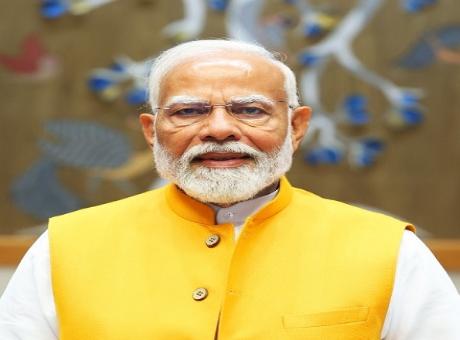
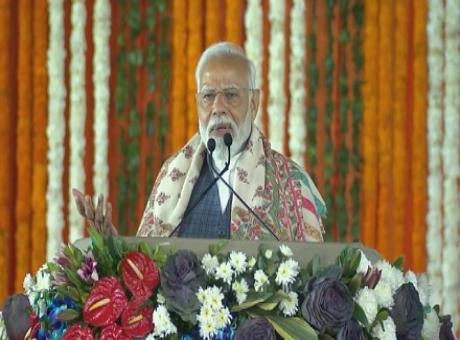
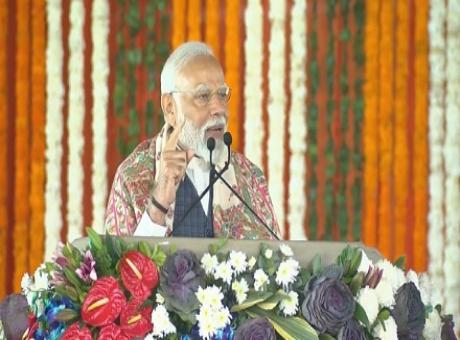
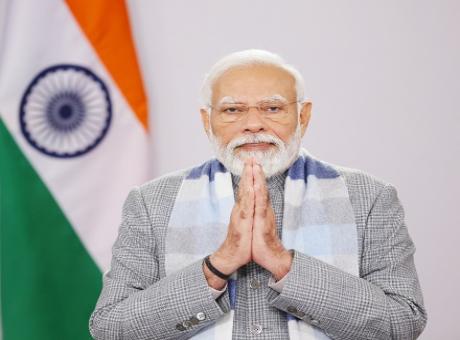
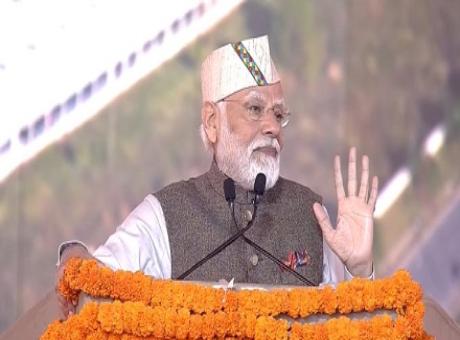
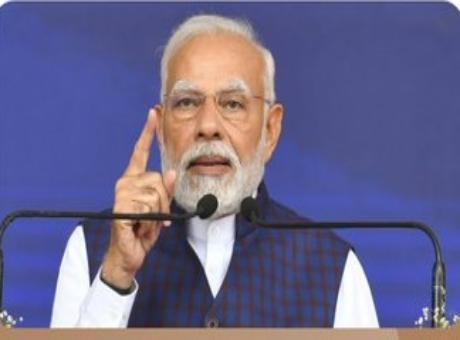
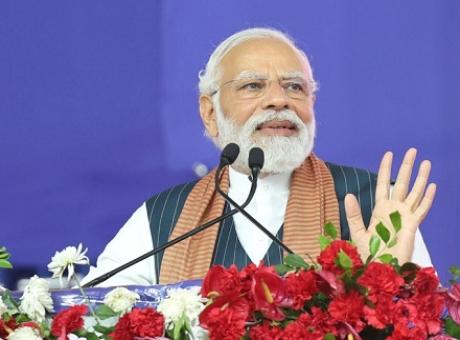
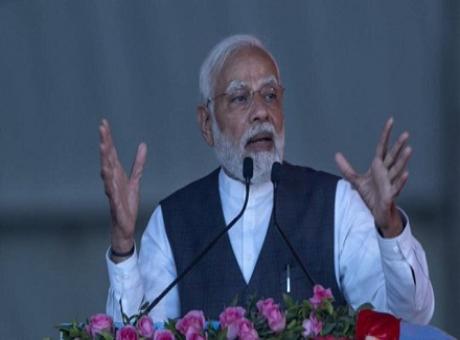
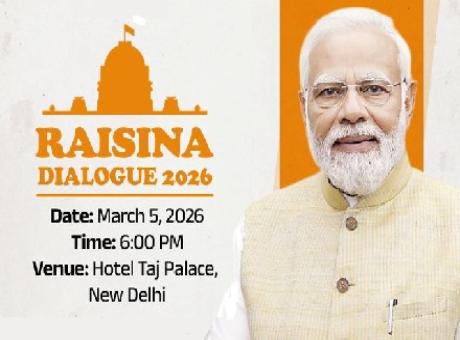
PM Modi to inaugurate Raisina Dialogue 2026 today
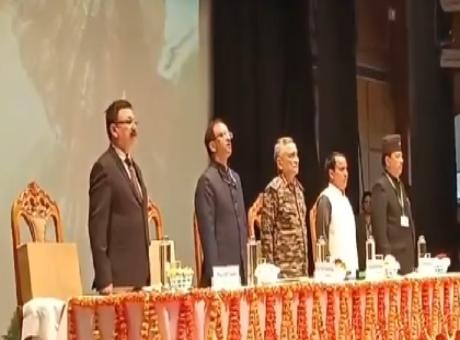
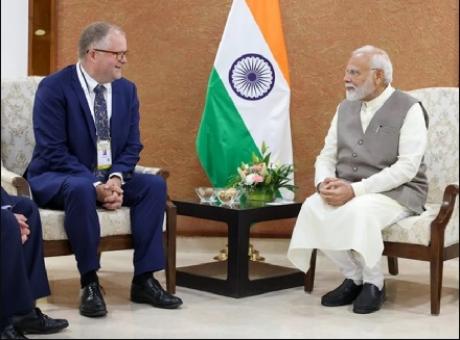
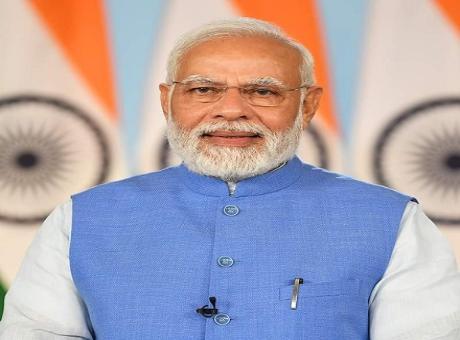
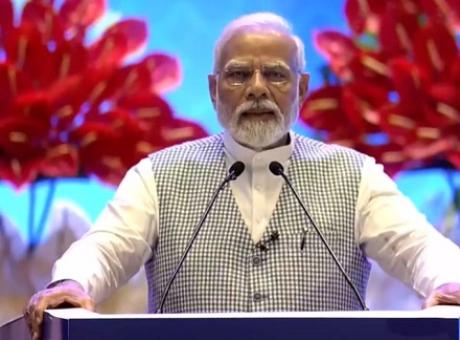
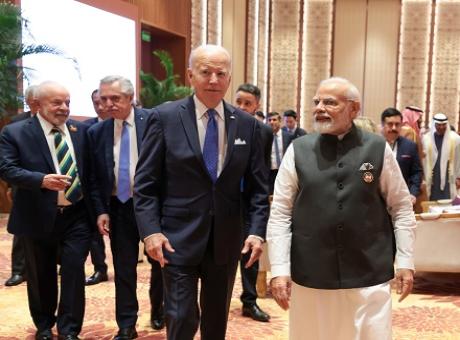
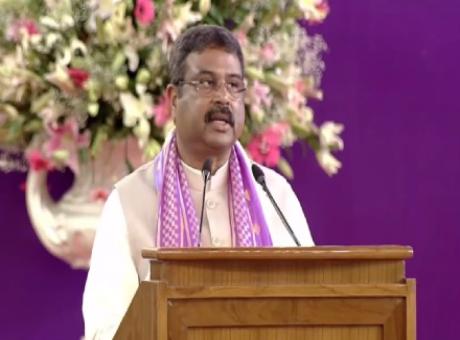
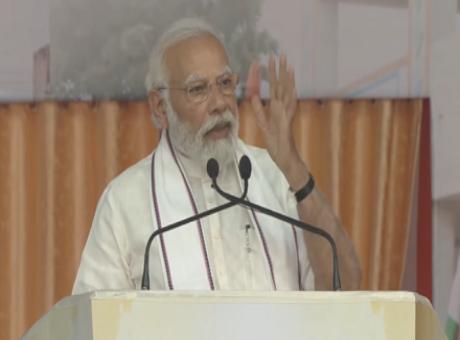
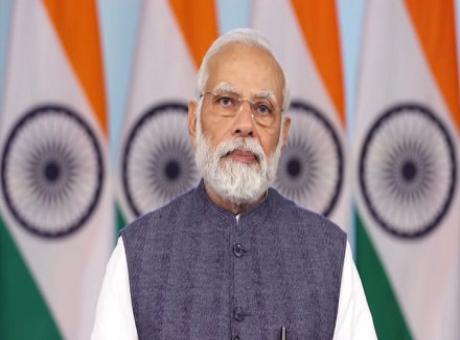
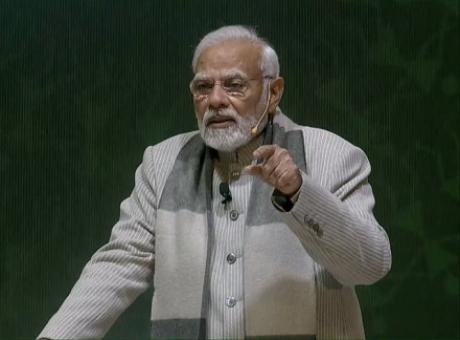
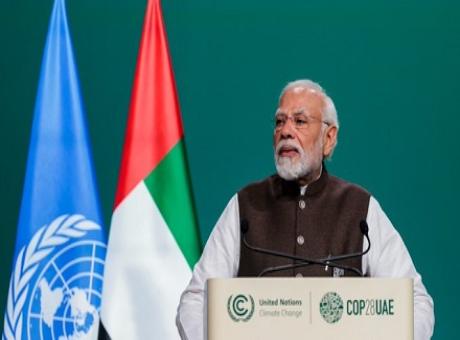
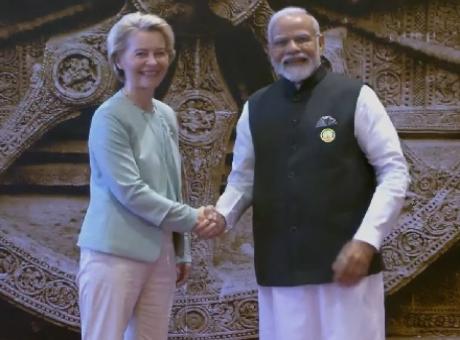
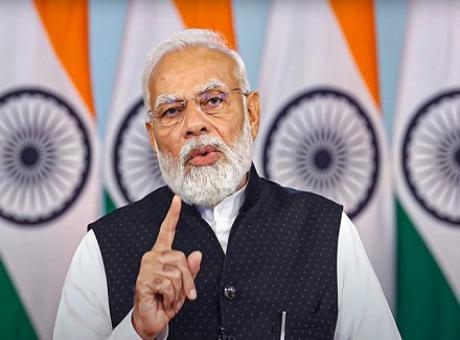
NEW DELHI [Maha Media]: Prime Minister Narendra Modi will inaugurate the 11th edition of Raisina Dialogue in New Delhi this evening. President of Finland, Dr. Alexander Stubb, will join the inaugural session as the Chief Guest, and deliver the keynote address. The Raisina Dialogue is India’s flagship conference on geopolitics and geo-economics, committed to addressing the most challenging issues facing the international community.
The Raisina Dialogue will witness participation of representatives from 110 countries including Ministers, former Heads of State and Heads of Government, Members of Parliament, Military Commanders, and Captains of Industry, among others.
The theme this year is “Samskara – Assertion, Accommodation, Advancement”. Over the course of three days, decision makers and thought leaders of the world will engage each other across conversations in various formats, over six thematic pillars. These pillars include Contested Frontiers: Power, Polarity, and Periphery, Repairing the Commons: New Groups, New Guardians, New Avenues and Trade in the Time of Tariffs: Recovery, Resilience, Reinvention.
Around 2700 participants from 110 countries will be joining the Dialogue in-person. The proceedings will be viewed by millions across the world on various digital platforms.
Several international dignitaries have arrived in New Delhi to participate in the event. These include Malta’s Deputy Prime Minister and Minister for Foreign Affairs and Tourism Ian Borg, Bhutan’s Minister for Foreign Affairs and External Trade D. N. Dhungyel, and Mauritius’ Minister of Foreign Affairs, Regional Integration and International Trade Dhananjay Ramful.
Other participating leaders include Seychelles’ Minister for Foreign Affairs and Diaspora Barry Faure and Sri Lanka’s Minister of Foreign Affairs, Foreign Employment and Tourism Vijitha Herath.
The chief guest for this year’s dialogue is Finland’s President Alexander Stubb, who arrived in the national capital on Wednesday.
Discussions during the conference will examine the growing tension between traditional alliances and what analysts describe as a “technopolar” world, where global influence is increasingly shaped by control over artificial intelligence, semiconductor supply chains and digital infrastructure.
The opening day will focus on the changing nature of global security and the emergence of digital-first governance models. Experts will also discuss the future of transatlantic security and the evolving role of the North Atlantic Treaty Organization (NATO), particularly as European members are expected to strengthen their defence capabilities amid uncertainties over long-term security commitments.
Another session will highlight India’s Digital Public Infrastructure model and its potential role in expanding digital inclusion.
Climate geopolitics will also feature prominently, with policymakers discussing ways to strengthen climate finance and protect green investments from geopolitical tensions.
On the second day, discussions will shift toward global security challenges and technological competition.
One of the major sessions will examine deterrence in the Taiwan Strait and the geopolitical implications of semiconductor dependence. Experts will also discuss defence production gaps between Western countries and Russia’s wartime industrial mobilisation.
Participants are also expected to debate the evolving role of the United Nations Security Council amid increasing unilateral actions by major powers.
Parallel sessions will explore Africa’s demographic rise, Latin America’s role in supplying critical minerals for the AI-driven economy and India’s strategic partnerships with Europe and Russia.
Experts will also address emerging risks related to advanced artificial intelligence, including autonomous systems, cyber vulnerabilities and issues of digital sovereignty.
The final day will focus on the future global order and economic resilience.
Sessions will discuss maritime security challenges across the Indian Ocean and the Red Sea, including threats to undersea communication cables and the use of autonomous maritime systems.
Participants will also deliberate on economic coercion and supply chain security, particularly as trade relations increasingly intersect with strategic rivalries.
Another key topic will be global connectivity initiatives such as the India-Middle East-Europe Economic Corridor, which is being seen as a potential trade and logistics corridor linking Asia, the Middle East and Europe.
Across the discussions, India is expected to highlight its role as a bridge between developed economies and the Global South, while presenting its long-term development vision of Viksit Bharat 2047, aimed at transforming the country into a developed nation by the centenary of its independence.
Now in its eleventh edition, the Raisina Dialogue has emerged as one of the world’s leading strategic forums and is often compared with the Munich Security Conference for its influence on global policy debates.