

 News
16-Day Pitru Paksha starts nationwide
- 2026-09-26 134
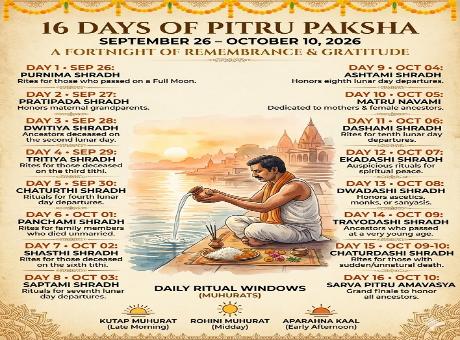
NEW DELHI [Maha Media]: The sacred period of Pitru Paksha has formally commenced across India today, September 26, 2026, marking the beginning of the highly revered sixteen-day ancestral fortnight. This period of deep spiritual reflection, remembrance, and gratitude begins with the Purnima Shradh today and will culminate on October 10 with Sarva Pitru Amavasya. Coming immediately after the grand, vibrant farewell of the Ganeshotsav festival, the transition into Pitru Paksha shifts the nation's atmosphere from joyous celebration to solemn introspection. During this fortnight, Hindus across the country pay homage to their departed ancestors through specific rituals, prayers, and acts of charity, seeking their blessings for peace and prosperity. The daily rituals are governed by strict cosmic timings, with families preparing to perform Tarpan and Shradh during the highly auspicious afternoon windows. Spiritual scholars emphasize that the rituals yield the greatest merit when conducted during specific periods known as the Kutap Muhurat and Rohini Muhurat, which typically fall between late morning and early afternoon. Devotees perform these rituals facing the southward direction, offering sacred water mixed with black sesame seeds, barley, and kusha grass to appease the souls of their ancestors. The first primary tithi of the dark fortnight, known as Pratipada Shradh, will be widely observed tomorrow, September 27, as families begin their specific lineage-based offerings. In alignment with traditional mandates, millions of households across the country are transitioning to a strictly sattvic lifestyle for the next two weeks. This involves maintaining a pure vegetarian diet that completely excludes onion, garlic, and heavy spices, alongside a strict prohibition on alcohol and non-vegetarian food. Furthermore, the period marks a temporary pause on all major auspicious events, celebrations, and material milestones. Religious customs dictate that major lifecycle events such as weddings, engagements, housewarming ceremonies, and the purchase of new vehicles or properties be deferred until the commencement of the auspicious Sharadiya Navratri festival in October. Beyond personal rituals, the fortnight places immense emphasis on community welfare and kindness toward all living beings. It is a widespread practice across both urban and rural regions to offer the first portions of prepared meals to cows, crows, and dogs, who are symbolically believed to carry the offerings to the ancestral realm. In holy towns and major cities alike, extensive arrangements are being made at riverbanks and temples to facilitate smooth rituals, while massive food donation drives are being organized to feed those in need, reinforcing the core festival philosophy that true ancestral peace is achieved through earthly compassion and selflessness. Complete 16-Day Day-by-Day Calendar Day 1 Sep 26 Purnima Shradh Officially marks the commencement of Pitru Paksha. Rites are performed for ancestors who passed away on a Full Moon (Purnima) day. Day 2 Sep 27 Pratipada Shradh The first tithi of the dark fortnight. Dedicated to maternal grandparents (Nana-Nani) if their specific dates are unknown. Day 3 Sep 28 Dwitiya Shradh Offerings are made for family members who passed away on the second day of any lunar fortnight. Day 4 Sep 29 Tritiya Shradh Rituals for those deceased on the third tithi. Also known as Maha Tritiya Shradh. Day 5 Sep 30 Chaturthi Shradh Rituals for ancestors who passed away on the fourth lunar day. Day 6 Oct 1 Panchami Shradh Dedicated to family members who died unmarried. Also referred to as Kuvidhwa Panchami Shradh. Day 7 Oct 2 Shasthi Shradh Rites performed for ancestors who passed away on the sixth tithi of any lunar cycle. Day 8 Oct 3 Saptami Shradh Dedicated to family members whose death coincided with the seventh day of the lunar calendar. Day 9 Oct 4 Ashtami Shradh Offerings are given to ancestors who passed away on the eighth day of the fortnight. Day 10 Oct 5 Navami Shradh Famously known as Matru Navami. This is the highly auspicious day designated for performing rituals for deceased mothers, grandmothers, and all female ancestors. Day 11 Oct 6 Dashami Shradh Prayers and Tarpan are conducted for departed souls who passed away on the tenth tithi. Day 12 Oct 7 Ekadashi Shradh Dedicated to deceased family members who passed away on Ekadashi. It is considered deeply auspicious for spiritual peace. Day 13 Oct 8 Dwadashi Shradh Also called Yati Dwadashi Shradh. It is reserved for ancestors who had taken renunciation or lived as ascetics (Sanyasis) before passing. Day 14 Oct 9 Trayodashi Shradh Historically reserved for performing rites for children or infants who passed away prematurely. Day 15 Oct 9 Chaturdashi Shradh Specifically dedicated to family members who met with a sudden or unnatural death (e.g., accidents, violence, weapon injuries, or poisoning). Day 16 Oct 10 Sarva Pitru Amavasya The grand finale of Pitru Paksha. This day serves as an all-inclusive window to perform Shradh for all ancestors, especially if you do not know their specific death tithis or missed rituals during the fortnight. Daily Ritual Execution Windows (Muhurats) 1. Kutap Muhurat (Late Morning): The primary auspicious time window when the sun starts peaking. 2. Rohini Muhurat (Midday): The second highly preferred window for presenting the main rice ball (Pinda) offerings. 3. Aparahna Kaal (Early Afternoon): The concluding period ideal for finishing the Tarpan (water offerings) facing the South direction.
For any of the days listed above, the daily rituals must not be done during early morning or evening hours. Instead, they should be timed according to the three specific solar periods: