


 नवीनतम
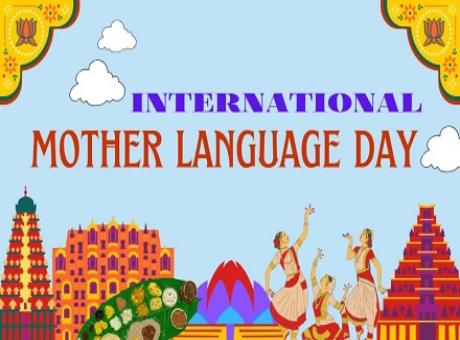
International Mother Language Day 2026: : History, significance
NEW DELHI [Maha Media]: International Mother Language Day is observed every year on February 21 to promote linguistic and cultural diversity across the world. The day highlights the importance of preserving mother languages and encouraging multilingual education for inclusive and sustainable societies.
The observance also reinforces the global commitment to safeguarding languages that are at risk of disappearing.
The day commemorates the 1952 Bengali Language Movement in Bangladesh, where students protested for recognition of their mother tongue. Their sacrifice led to global recognition of linguistic rights and diversity.
In 1999, UNESCO declared February 21 as International Mother Language Day, and it has been observed worldwide since 2000.
This year's theme, a Youth voices on multilingual education, emphasises the crucial role young people play in preserving and promoting linguistic diversity.
The theme underlines that language is not merely a tool for communication; it is central to identity, learning, emotional well-being and meaningful participation in society. By empowering youth to advocate for multilingual education, societies can create more inclusive learning environments.
International Mother Language Day seems only fitting that we pause to appreciate something we mostly take for granted: the very first language we learned. Unlike most things in life (kitchen appliances, relationship problems), your mother tongue doesn’t come with an instruction manual. You just pick it up somehow, like an earworm you didn’t invite. Yet, as researchers and educators increasingly remind us, being proficient in that language is not just sentimentally nice, but also good for the mind and for wellbeing.
The Linguistic Advantage
According to UNESCO’s World Inequality Database on Education, children who are taught in a language spoken at home are about 30% more likely to be able to read with understanding by the end of primary school compared to those taught in an unfamiliar language. It’s not just about school grades. Language shapes how we think. When our thoughts are dictated by unfamiliar vocabulary, alien sentence rhythms, or foreign grammar rules, it’s like trying to navigate a familiar city while wearing someone else’s prescription glasses... everything is just a little off.
In a classic study conducted in South Africa, researchers found that primary students instructed in their native languages scored significantly higher in mathematics and science than students taught in a second language... even when the curriculum and teachers were otherwise identical.
Emotional Well-Being
Let’s turn from the cognitive to the emotional. Your mother tongue is emotional architecture. It is laughter, scolding, lullabies, love, argument, tears, pride, and apology wrapped into sound. When a child grows up hearing tender expressions of love in a particular language, that language becomes intertwined with safety and authenticity. Language is psychological real estate; once you displace someone from it, they lose confidence.
Adult Brains
For adults, retention and mastery of an early-acquired language shows real benefits too. A 2024 study by the National Institute of Mental Health and Neurosciences in Bengaluru found that bilingualism (especially with an ancient mother tongue) can delay the onset of dementia and cognitive decline by several years. So, juggling multiple languages strengthens neural pathways. There’s a specific kind of comfort in returning to the language that once lulled you to sleep. That sense of linguistic homecoming is neurocognitive grounding.
In a study from Canada, people who communicated with their families in a language other than English or French (even if they were dominant in the national language) showed better mental health outcomes and lower levels of depression and anxiety.
In the 21st century, the languages of global commerce (English, Mandarin, Spanish) dominate media, business, and entertainment. This is practical and often beneficial. But it has also contributed to the erosion of many local languages worldwide — over 40% of which are endangered according to UNESCO. Encouraging mother tongue proficiency does not mean rejecting global languages. It simply means recognizing that starting strong is the smart way to build a more literate, confident, and emotionally stable society.
International Mother Language Day celebrates diversity but let’s be clear: proficiency in your mother tongue is cognitive empowerment. So today, whether your mother tongue is Hindi, Tamil, Bengali, Rongmei, Sorbian, or Swahili, take a moment and speak it proudly. Your brain will thank you. Your heart will too!